Quick summary: Most CS teams now offload admin work to AI, but the time saved isn’t translating to better NRR. To drive growth, teams need to measure time saved, devote more time to growth activities, and gradually build AI trust.
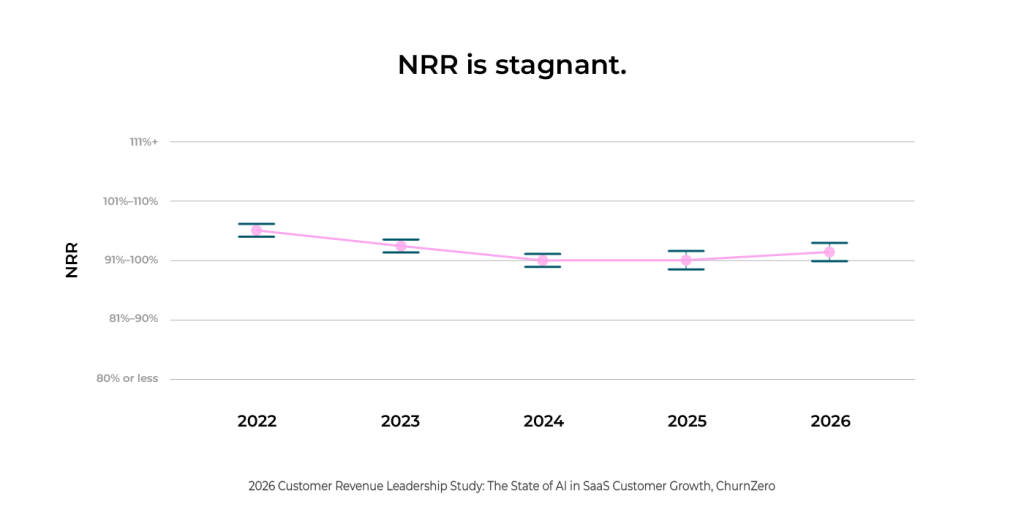
The large majority of CS teams are primarily using AI to automate manual tasks and save time for CSMs. In theory, reducing the administrative workload should free up more bandwidth for CSMs to focus on work that drives NRR. But in reality, NRR hasn’t improved for the SaaS industry in the last three years.
ChurnZero polled almost 580 CS leaders for the 2026 Customer Success Leadership Study to learn how they’re currently using AI, and confirmed that time savings isn’t driving NRR. To make a bigger impact, CS teams may need to move beyond the tactical and start thinking strategically about how AI can help them drive NRR performance.
The trends: AI time savings vs. NRR stagnation.
The study showed that CS leaders are automating manual tasks with AI, but NRR remains unaffected:
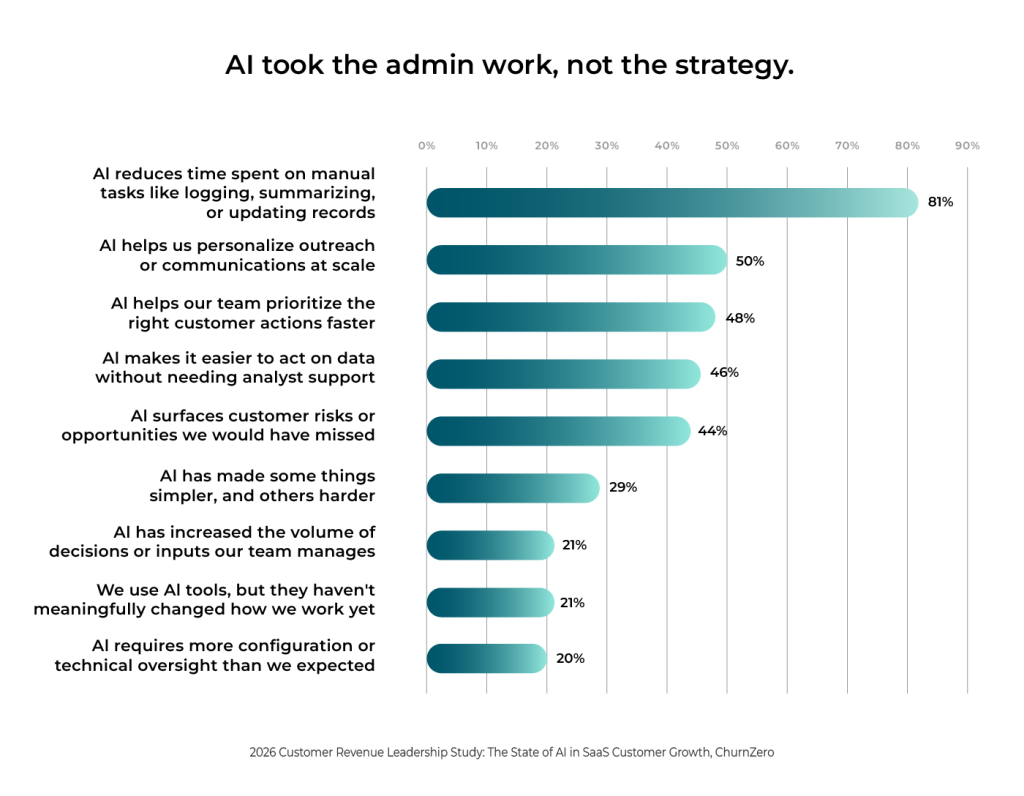
- 81% of leaders say AI reduces the time spent on manual tasks like logging tasks, summarizing leads and calls, and doing account research
- NRR remained flat from 2024 through 2026, which suggests that AI has not moved the needle
 Why time saved doesn’t automatically increase NRR.
Saving CSMs time on manual, repetitive tasks may not automatically result in better NRR for a number of reasons:
- Saved time isn’t being redirected: If you aren’t reallocating rescued time or resources back toward activities that drive NRR, you might not see a meaningful change.
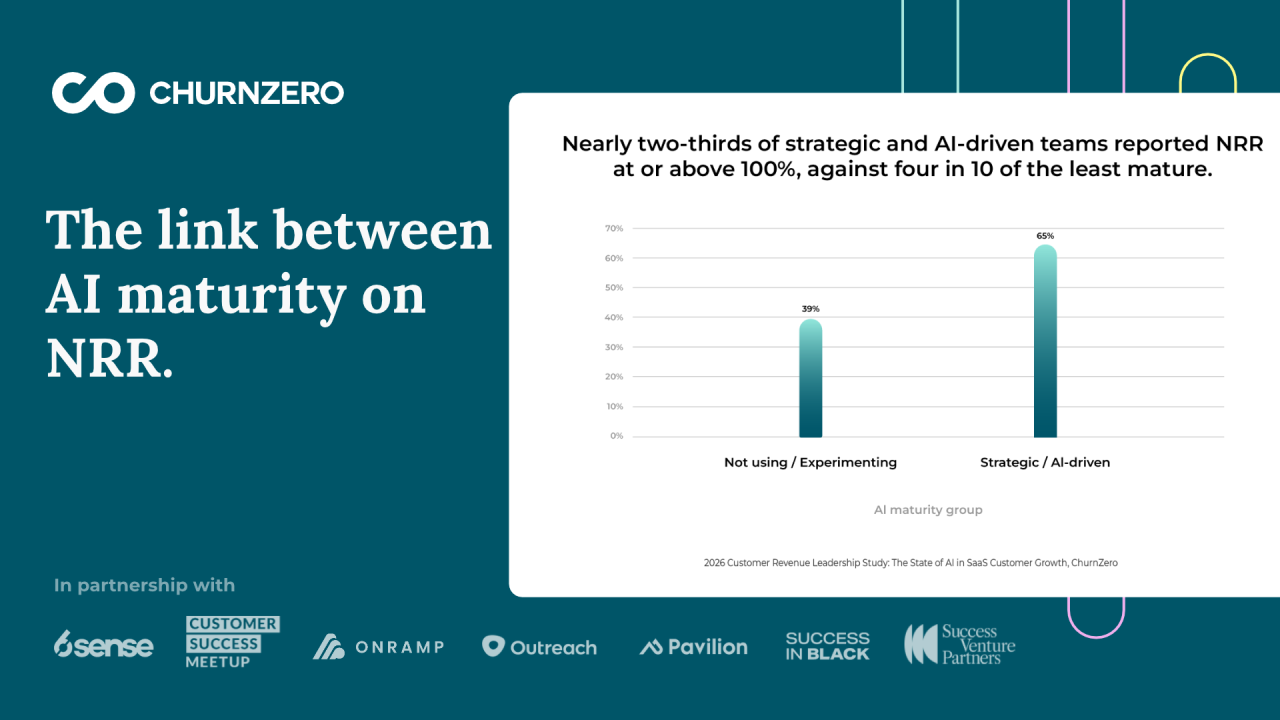
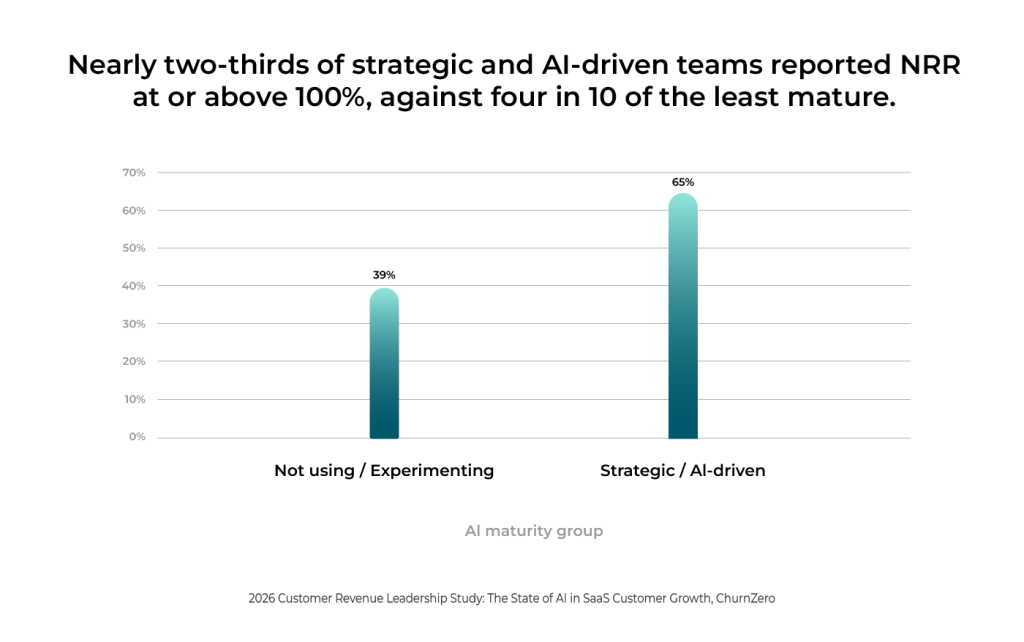
- AI maturity: While NRR remains flat industry-wide, AI maturity correlates to higher NRR. When ChurnZero compared the AI maturity of teams that report NRR of 100% or higher, the results were clear:
- Nearly two-thirds (64.6%) of strategic, AI-driven teams reported NRR of 100% or higher
- Only 39.4% of underdeveloped AI teams reported NRR of 100% or higher
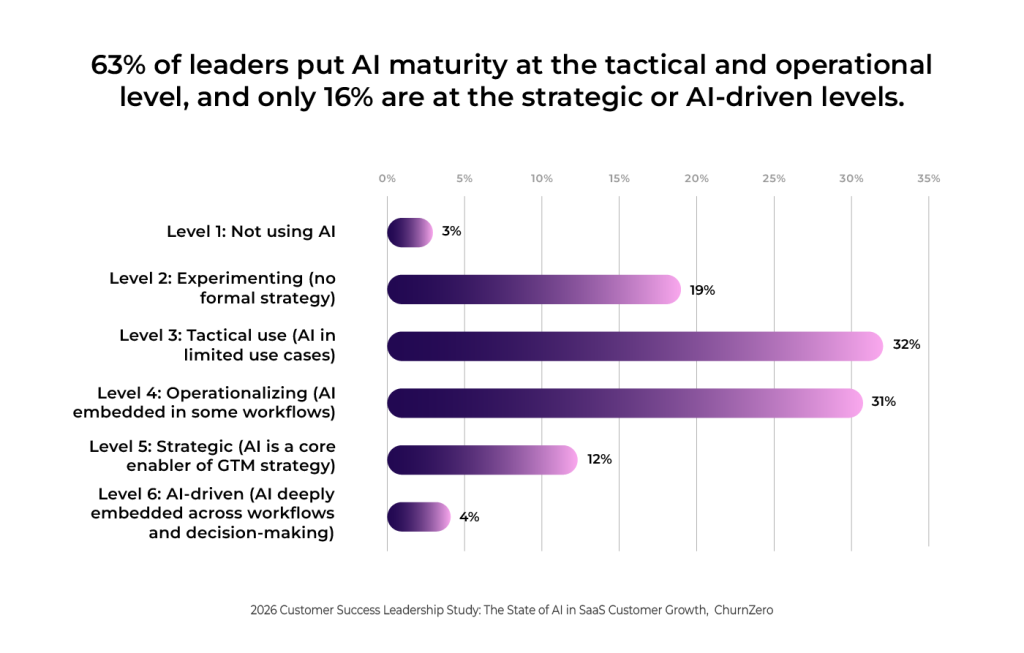
- Teams are still in the experimental phase: According to the study, 19% of leaders put AI maturity at the experimental phase, and 32% at the tactical phase (with AI used in limited cases). When teams are still playing around with AI capabilities, they may still be distracted from their day-to-day work – and they may end up building redundant tools or workflows that end up abandoned.
- Low trust in AI: Four in 10 teams still require human approval at every step. This can create a bottleneck because teams still need to review and approve AI output, even when they’re saving time on administrative work.
How to close the gap between AI time savings and NRR performance.
Saving time for CSMs is a worthwhile goal, but it won’t automatically improve your team’s performance. Start using AI strategically so your CSMs can focus on work that impacts revenue.
Determine how much time you’re actually saving
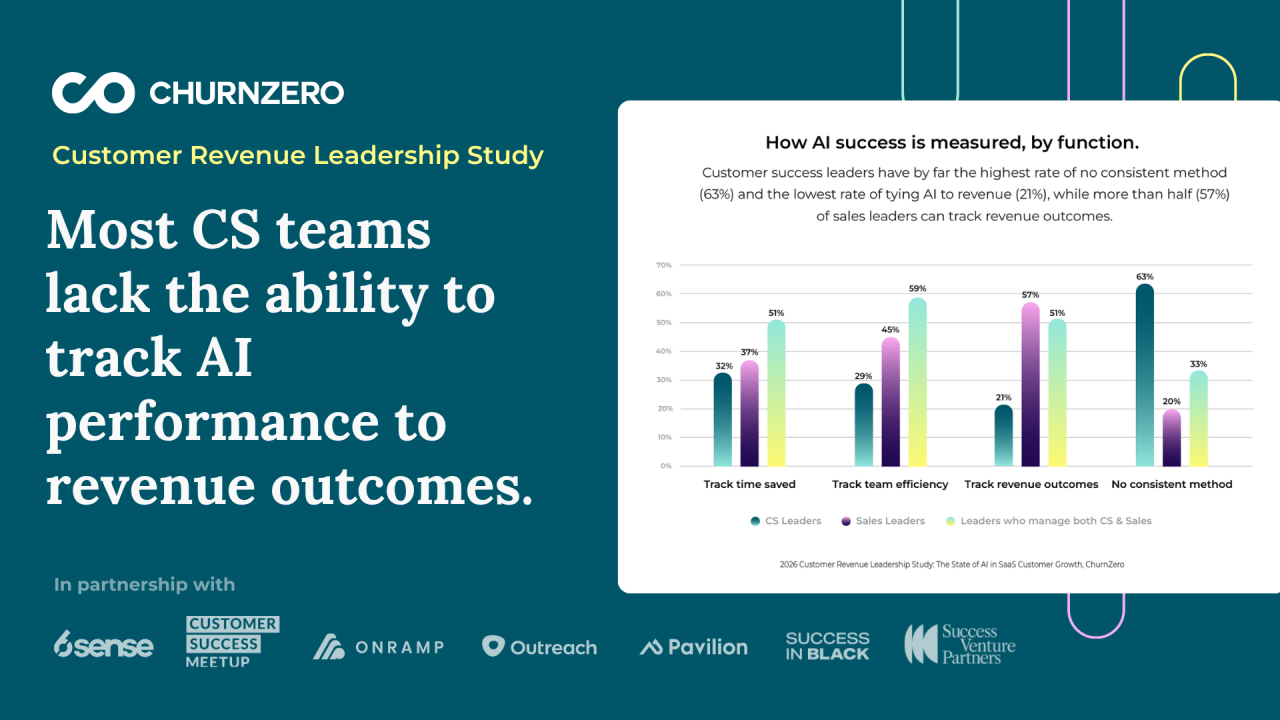
CS teams say they’re saving time on manual tasks, but most teams have no reliable way to report on AI performance – 63% of CS leaders say they have no method to measure AI impact. This means teams can’t say how AI is improving their work, or show how it’s making a difference at all. And if you can’t tie AI to team outcomes, you certainly can’t show how it’s affecting NRR.
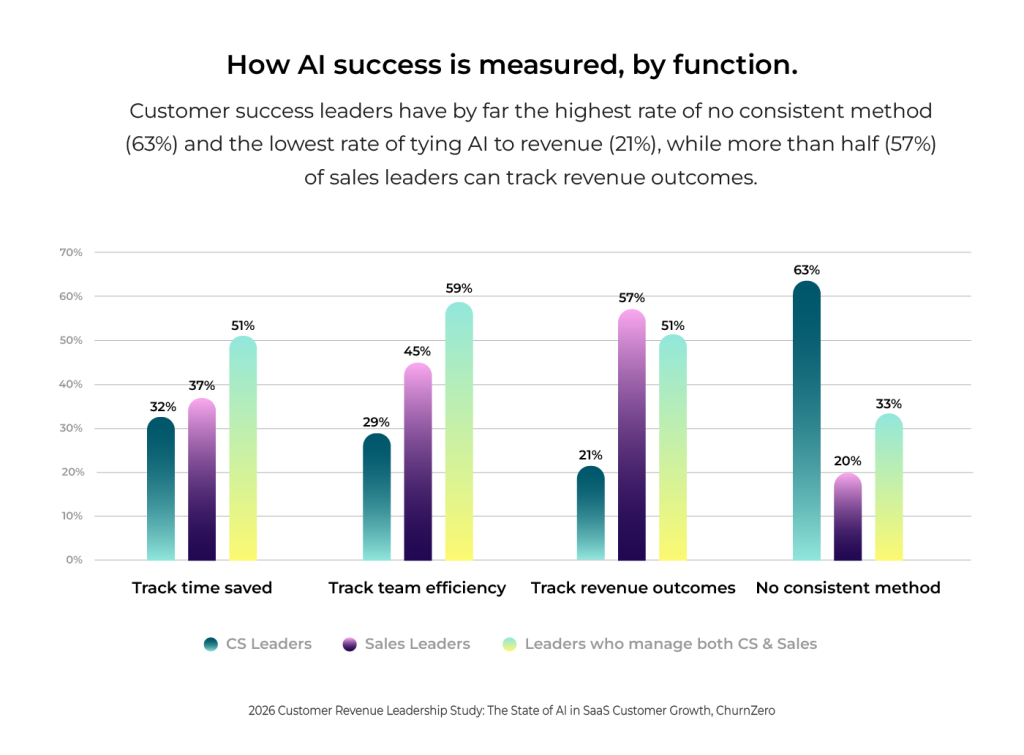
If you want to show the impact that AI is having (and redirect it toward NRR-focused activities), start measuring what AI does for you.
- Take inventory of AI workflows: Make a list of all the current administrative tasks that AI manages for your team, or identify the workflows that you’re about to automate.
- Write down the benchmark: Find out how much time each administrative task takes for a CSM without AI assistance. Make sure to look at specific time-sinks, like QBR preparation or call summaries.
- Record AI performance. Start tracking how much time each administrative task takes AI to perform. Check in on those numbers on a quarterly basis.
- Find out how much time you’ve saved. Now you can see how much time your CSMs are getting back on a daily, weekly, or monthly basis. This can help you determine how much time you have to redirect toward more impactful work.
Refocus your team on work that drives NRR
For many CS teams, leaders should focus on reallocating time and resources toward activities that drive retention and expansion. If CSMs are gaining more bandwidth in their day, they should be able to assume a greater role in driving the success of the team:
- Managing larger customer portfolios: With less time spent researching accounts, preparing for meetings, or building presentations, CSMs could potentially manage a larger book of customers. Be careful when rebalancing portfolios, however — you don’t want your CSMs to risk their customers by biting off more than they can chew.
- Booking expansion calls: Your CSMs devote more time to researching accounts and identifying expansion opportunities, then scheduling calls with the customer. With more advanced tools, you can even have AI automatically review accounts and surface buying opportunities directly to the CSM, who can then focus on selling the expansion.
- Career development: Make sure your team is consistently developing their skills through training, collaboration, and career progression. You want CSMs with the ability to handle challenging, high-value tasks like negotiating new deals, saving at-risk accounts, and developing partnerships with the customer.
Build AI trust over time.
CS teams don’t start out with a lot of trust in AI – possibly because they have no method for measuring it. Four out of five teams stop AI before it makes any strategic decisions, and nearly four in ten teams still require human intervention at every step. To advance AI maturity (which correlates with higher NRR), teams can develop trust in AI and let it handle more high-value tasks over time.
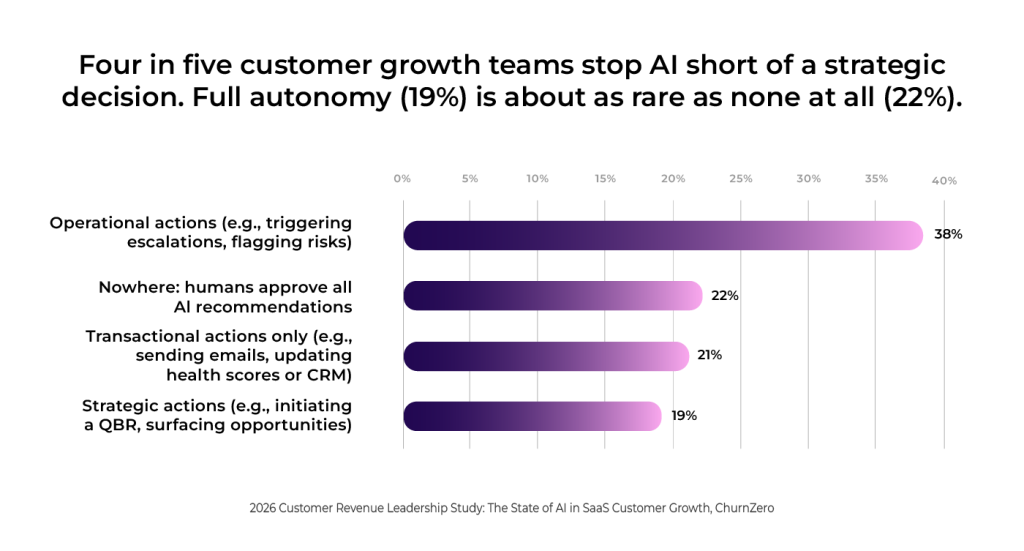
When automating CS workflows, teams should start by including a human who signs off on AI actions, messages, or recommendations – ChurnZero CEO You Mon Tsang recommended this approach in a recent episode of the Startup Builders & Backers podcast. Once leaders are more comfortable with AI autonomy, they can gradually shift toward full automation. This doesn’t need to be an all-or-nothing proposition, and can follow a natural progression over time.
Time saved for CSMs should be used for retention and expansion.
While 81% of CS teams use AI to automate administrative work, NRR remains flat – it’s a reasonable deduction that saving time is only half the battle. Clawing back hours in your day only makes a difference if you use them for growth activities. By measuring AI impact, reallocating time toward retention and expansion, and building AI trust incrementally, leaders can turn AI time savings into a tool for revenue expansion.