Quick summary: Behind every at-risk account lurks a Churn Monster, and no two look alike. In Meet the Monsters, our panel of CS experts went head-to-head with four of them and shared practical plays for spotting each one and winning the account back.
Knowing which monster you’re facing is half the battle, because each calls for a different response:
- Disengaged goes quiet and stops responding
- Know-It-All pushes back on guidance and advice
- Unlucky has unfortunate circumstances that frustrate them
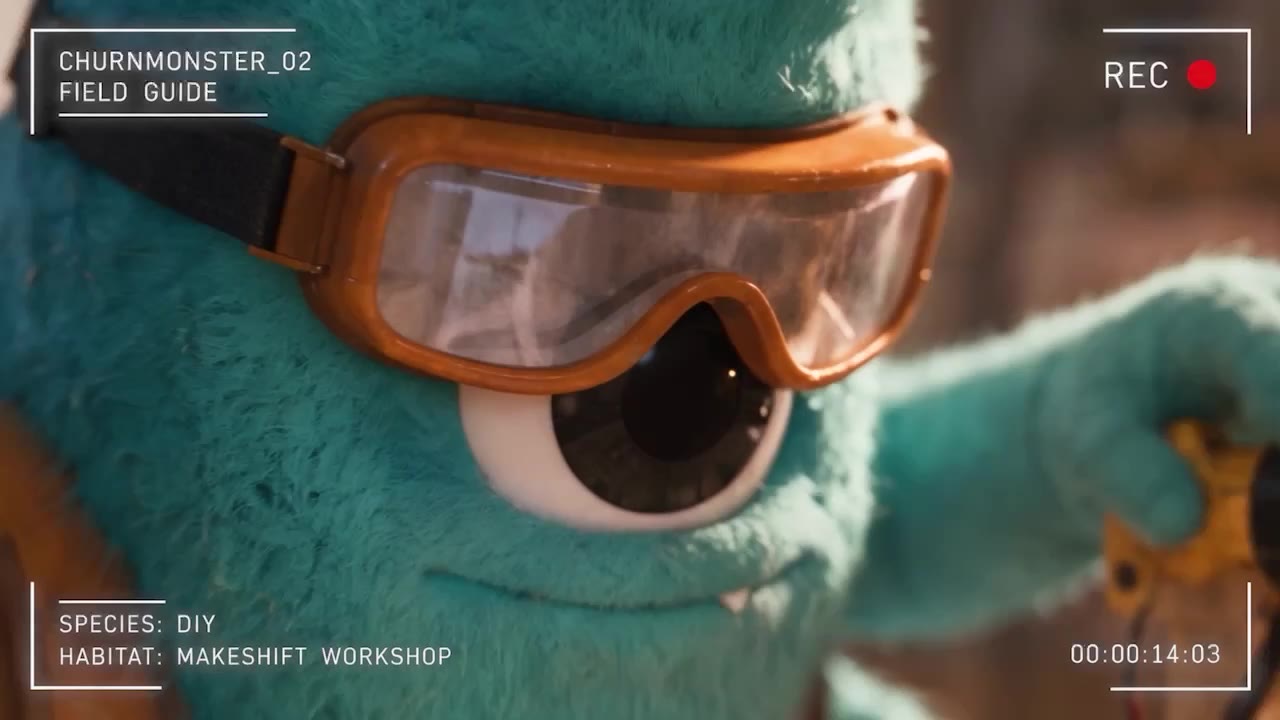
- DIY wants to build their own fix and replace you
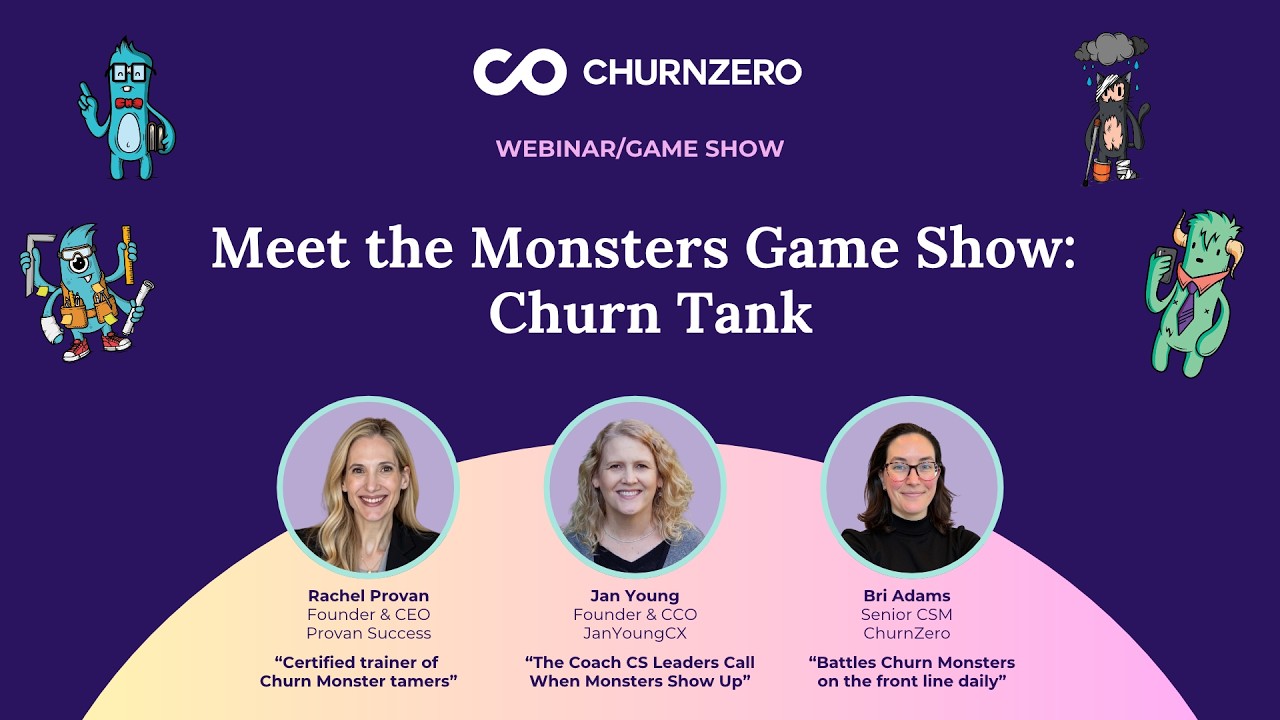
In a spooky-themed Meet the Monsters Gameshow webinar, Ravi Pimplaskar, senior director of revenue marketing at ChurnZero, discussed how to survive different Churn Monsters with three CS experts:
- Bri Adams, Senior CSM, ChurnZero
- Rachel Provan, Founder & CEO at Provan Success
- Jan Young, Founder & Chief Customer Officer at JanYoungCX
Check out the full webinar here:
Churn Monster 1: Disengaged
Disengaged is one of the most common types of Churn Monster. It’s characterized by declining platform usage, missed meetings, and unanswered emails. CS teams can try to revive ghosters using a few tactics:
- Automatically detect the disengagement: Flagging early warning signs can help CSMs respond faster. Set up automations that detect signs of ghosting, such as platform usage dropping, customers not responding to emails, and other telltale symptoms, Bri said.
- Reframe around the customer’s pain points: If you can reach the customer, reframe the conversation around their immediate challenges, even if it wasn’t the original reason they came onboard, Rachel said. Focus on taking work off the customer’s plate.
- Build trust with a personal touch: “Try a 90-second video. If you can put a video of yourself in their inbox so that they see your face, they see you saying their name, that can help you build trust, and … a little bit of social capital.” — Bri
- Skip the gifts: Sending branded gifts or swag is nice, but it doesn’t really solve your problem or get the customer engaged with the product, according to Jan. Instead, focus on the actual issues the customer is facing.
Churn Monster 2: Know-it-all’
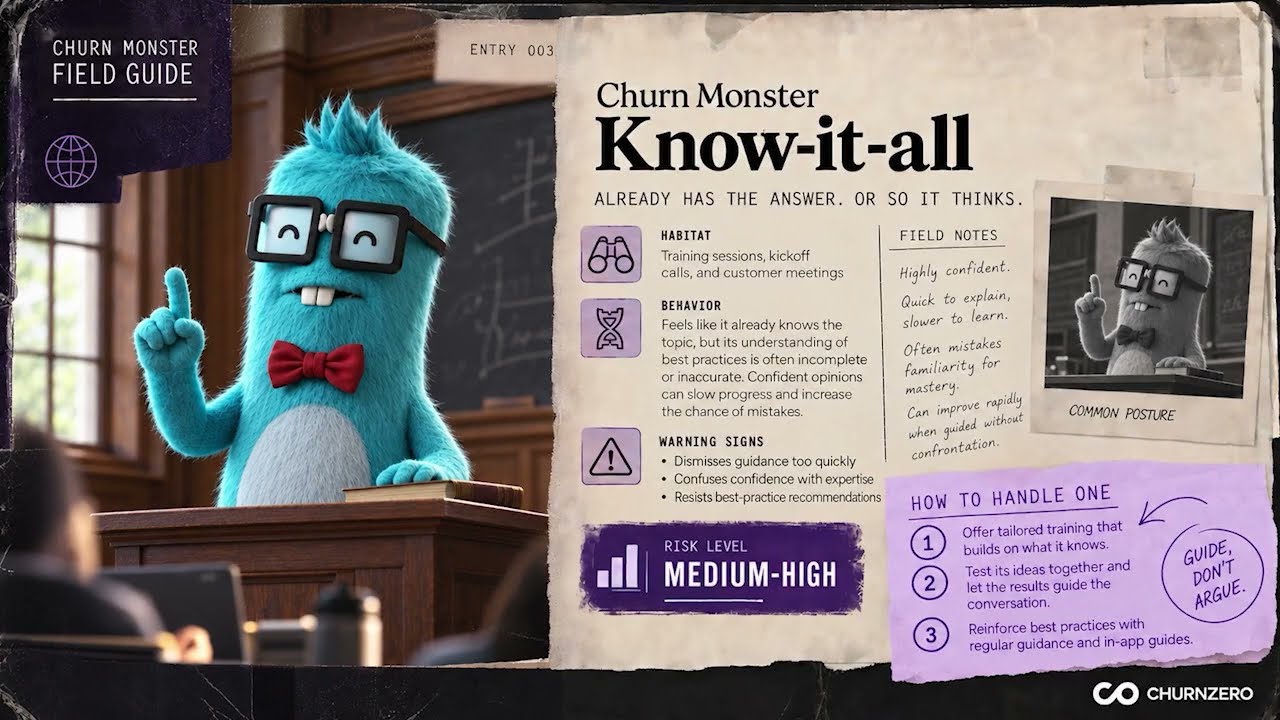
Know-it-all thinks they know better and have nothing to learn from you. Telltale characteristics include skipped onboarding calls, declined training sessions, stalled implementations, and an inability to take advice. Sometimes it takes some humility to handle know-it-alls:
- Validate their expertise: If someone insists they’re more of an expert than you, you’re not going to win a battle of wills. Instead, validate their expertise and knowledge, Rachel said.
- Learn from them: “If they are experts, you want to know how experts would use your product. If you aren’t authentic, [they’re] gonna see that from a mile away. You have to really want to learn from them, and learn with them.” — Jan
- Create opportunities to “set you straight”: Give the customer openings to demonstrate their knowledge, Bri said. “Am I starting too granular, and you need more high level? Like, set me straight, tell me what it is that you care about and you want to focus on, and I can try and customize my individual approach with you.”
- Hold the line on process: Too much appeasement, however, can disrupt your onboarding or customer experience. Don’t change your process for every single customer who thinks they know better, Bri said.
Churn Monster 3: Unlucky
The overwhelmed worker is dealing with organizational forces outside their control. They might be overworked, coping with employee turnover, or adjusting to slashed budgets. Unlucky needs help but may not have the bandwidth to ask for it:
- Use an empathetic approach: “When someone is feeling [overwhelmed], they are not in a logical part of their brain. And if you try and start with logic, well, here’s how we can fix it. Step 1, step 2, step 3, they’re like, I can’t wash my clothes right now, I’m so overwhelmed … These are humans that you are talking to. And you’re gonna go so much farther treating them as a human than you are as a business case. Human first, then business.” — Rachel
- Make the next step manageable: Sometimes you need to take baby steps to help your overwhelmed customers make progress. Identify the smallest step that the customer could take to move them in the right direction, even if it only takes five minutes, Rachel said.
- Find other stakeholders: Did your original brand champion leave the company or get pulled in a different direction? See if you can find the other stakeholders — and leverage that original champion to make the connection if you can, Bri said.
- Treat company crises as red accounts: Even if there isn’t much you can do to address the customer’s crisis, you shouldn’t wait around for the winds to change. Treat the account as at-risk and see what you can do to make renewals easier — such as price adjustments (like a $1 renewal offer) or extra support, Jan and Bri said.
Churn Monster 4: DIY

DIY thinks they can build your platform internally and replace you with a homegrown solution. They might need a gentle reality check:
- Don’t dismiss their ideas: First, Rachel recommended expressing some initial enthusiasm for the idea. From there, you can start to get into the challenges around DIY or custom solutions.
- Explain that AI isn’t magic: Many people believe that they can use AI to effectively recreate a product, but AI is not perfect. It can get things wrong, and unless you have flawless operations and data, you risk making big mistakes, Rachel said.
- Show the real cost of building: The human and resource cost of DIY building often outweighs the subscription cost of an established product that works. “It’s high-level resources spending their time building out these AI resources, or workflows. Their time is worth hard dollars.” — Bri
- Reconnect to their actual job: Is building software to replace your solution what DIY was hired to do? They might be excited about the project, but at the cost of not focusing on their own job responsibilities or delivering value for their role, Rachel said.
Tailor your strategy for each Churn Monster
Before you charge off to defeat these menaces, take a pause and consider the best approach:
- Diagnose before you act: Customers churn for different reasons, so know how to spot the warning signs and match your response to the customer’s challenge.
- Lead customer-first: Make sure you understand and consider the customer’s goals as you make an action plan to support their account. Empathy and curiosity can help open more doors than renewal or expansion pressure can.
- Establish clear next steps: Identify the customer’s problem, then agree on a plan together. Establish small, well-defined steps that the customer can take even when their focus is elsewhere.
“Put some next steps together to make them one of your evangelists in three to six months, and work on that plan together,” Bri said. You can use these strategies to keep your customer accounts healthy, safe, and out of the claws of the Churn Monster.