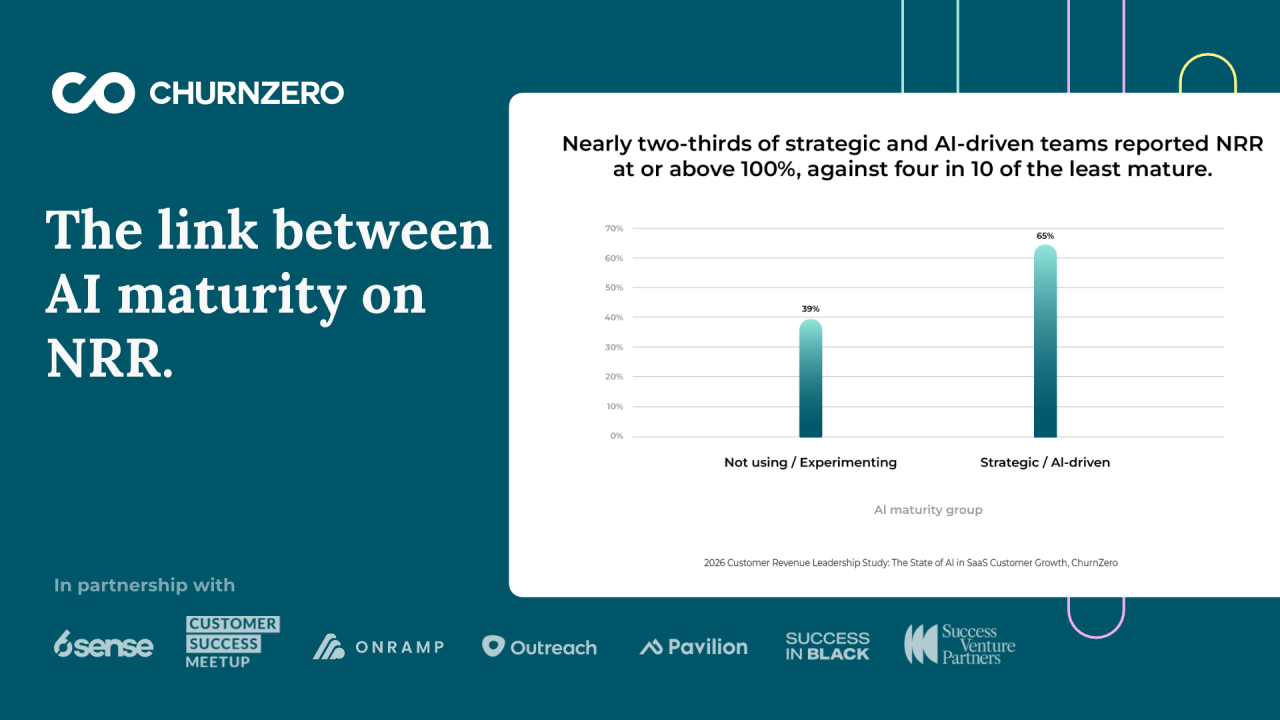
Does your customer success team own and drive expansion revenue? You should, because upsell and cross-sell are key drivers of the sustainable growth your company needs, and yet only 43% of CS teams do.
What’s holding customer success back on driving expansion? After all, CS has the customer relationships and insights to drive expansion thoughtfully, the health scores and product usage data to spot opportunities, the best understanding of customer needs, and the customer trust earned through coaching and partnership.
All too frequently, says HelloCCO Rod Cherkas, it comes down to the lack of a formal, repeatable expansion process. Now, he’s on a mission to change that with the REACH Framework.
What is the REACH Framework for driving expansion in customer success?
The REACH Framework is a data-driven, five-component expansion framework designed to help CS teams capture expansion revenue repeatably.
- Relationships: Strengthening relationships with key customer stakeholders and decision-makers.
- Engagement: Tracking and increasing product usage and overall customer engagement.
- Actions: Identifying and acting on specific customer behaviors that signal expansion potential.
- Customer Value: Demonstrating realized customer value to influence expansion decisions.
- Horizons: Understanding customers’ broader strategic and business goals to anticipate future opportunities.
We invited Rod to join ChurnZero’s customer success webinar series, where he broke the REACH Framework down for us with details of how to put it into action. You can watch it in full here, or keep reading to explore each component.
Applying the REACH framework to drive expansion in customer success.
R is for Relationships
Evaluating and enhancing the depth of your team’s connections with customer champions, power users, and decision makers is critical for driving expansion.
Schedule regular strategic meetings to align your service with their business goals, build your value as a trusted advisor, and maximize your product’s value as a contributor to your customers’ success. Look for opportunities to broaden your product’s adoption within their organization.
Train your CSMs to:
Actively seek feedback from the same stakeholders and others, which can turn everyday users into advocates within a customer’s organization. Provide the same users with opportunities such as case studies to share their success and build their professional standing.
E is for Engagement
You can’t drive expansion in customer success unless customers are actively using your product and realizing tangible benefits.
Use your customer success software and other product analytics sources to monitor how customers interact with your product and identify where the low-engagement areas are. Set up alerts that tell you when usage drops, or when customers aren’t using the product to its full potential.
Train your CSMs to:
Engage customers to encourage deeper and more frequent usage in these areas. Be as targeted and relevant to each customer as possible, with personalized suggestions or even usage reports.
Provide educational resources such as webinars and product walkthroughs to remove barriers to adoption. Encourage your team to ask for feedback on these resources and to keep their lines of communication open.
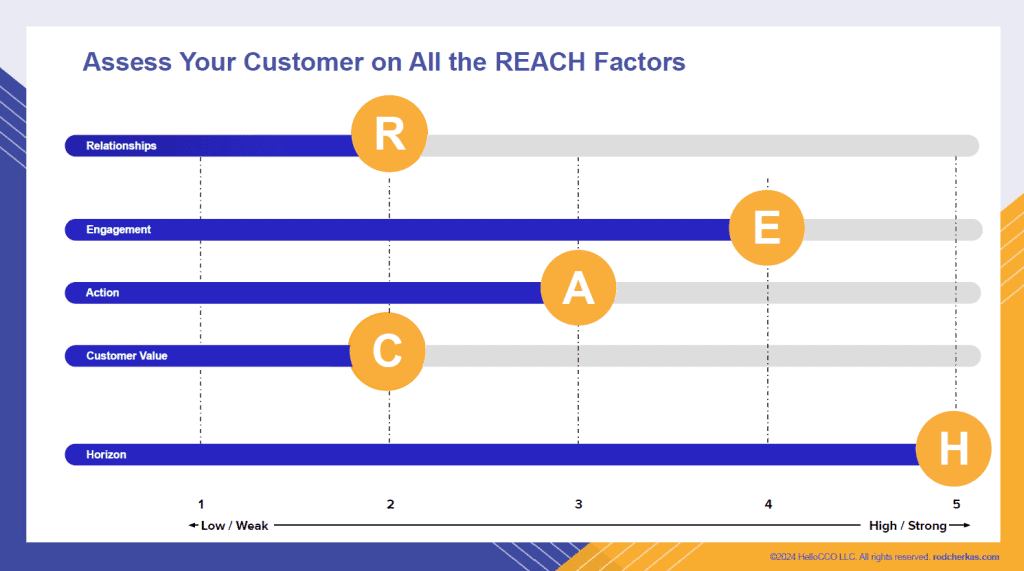
This REACH Framework matrix helps you assess customers’ readiness for expansion, and prioritize your efforts.
A is for Actions
Pay attention to requests for additional product information, questions about advanced features, or discussions about broader application needs within a customer’s business. They are all signals that a customer is potentially ready to expand.
Make it a priority to respond promptly and appropriately to these cues.
Train your CSMs to:
Recognize customers’ expansion signals, understand their implications for upsell and cross-sell opportunities, and follow up with engagements that highlight the relevant features and how they align with the customer’s objectives.
To help CSMs act on these signals effectively, create a structured framework of review sessions to discuss them, strategize on next steps, and prioritize their follow-ups.
C is for Customer Value
Customer value isn’t just about how each customer defines and measures it—it’s also about how you communicate it to them. The better you show it, the easier it becomes to influence upsells.
Develop a clear methodology for quantifying and demonstrating customer value provided. This could involve detailed case studies or reports highlighting specific benefits such as cost savings, productivity, or enhanced performance achieved through your service.
Train your CSMs to:
Conduct regular value reviews with customers, discussing current product usage, aligning it with their business goals, and illustrating how your product has impacted their operations.
CSMs should ask targeted questions to uncover new areas where value can be added with upgrades or additional services, then follow up with personalized communications or offers.
H is for Horizons
Once you’re capturing real-time expansion opportunities effectively, you can level up your expansion program by working to anticipate future opportunities too. This requires a broader understanding of your customers’ horizons: their current and future business goals within the context of their industry.
What are their upcoming projects? What new markets are they planning to enter? How will their business strategy change—and what expansion opportunities do these plans present? The earlier you know about these growth opportunities, the more effective your expansion outreach will be.
Train your CSMs to:
Identify and leverage indicators that signal growth opportunities within the customer’s broader business landscape. These might emerge during strategic discussions with customers; or from paying attention to broader factors like market trends, financial health, and strategic initiatives.
Equipped with this intel, CSMs can better align your product’s capabilities with customers’ new business needs, and demonstrate how it can facilitate their goals.
Want to dig deeper into the REACH Framework?
You’ll find the entire framework outlined in Rod’s new book, REACH: a Framework for Driving Revenue Growth from Existing Customers.
You can also follow Rod and HelloCCO on LinkedIn here.