About the 2026 Customer Revenue Leadership Study
This year’s Customer Revenue Leadership Study is brought to you by

The state of AI in SaaS customer growth.
The bottom line: AI has a way to go to build trust.
- Almost everyone is using AI, but mostly for administrative tasks.
- The most common response to “How do you measure AI?” is “We don’t.”
- Four out of five teams stop AI short of making strategic decisions.
- Seven in 10 teams have built their own AI tools. Most are not in official use.
- Internal blockers to AI use aren’t obstacles for those building AI tools.
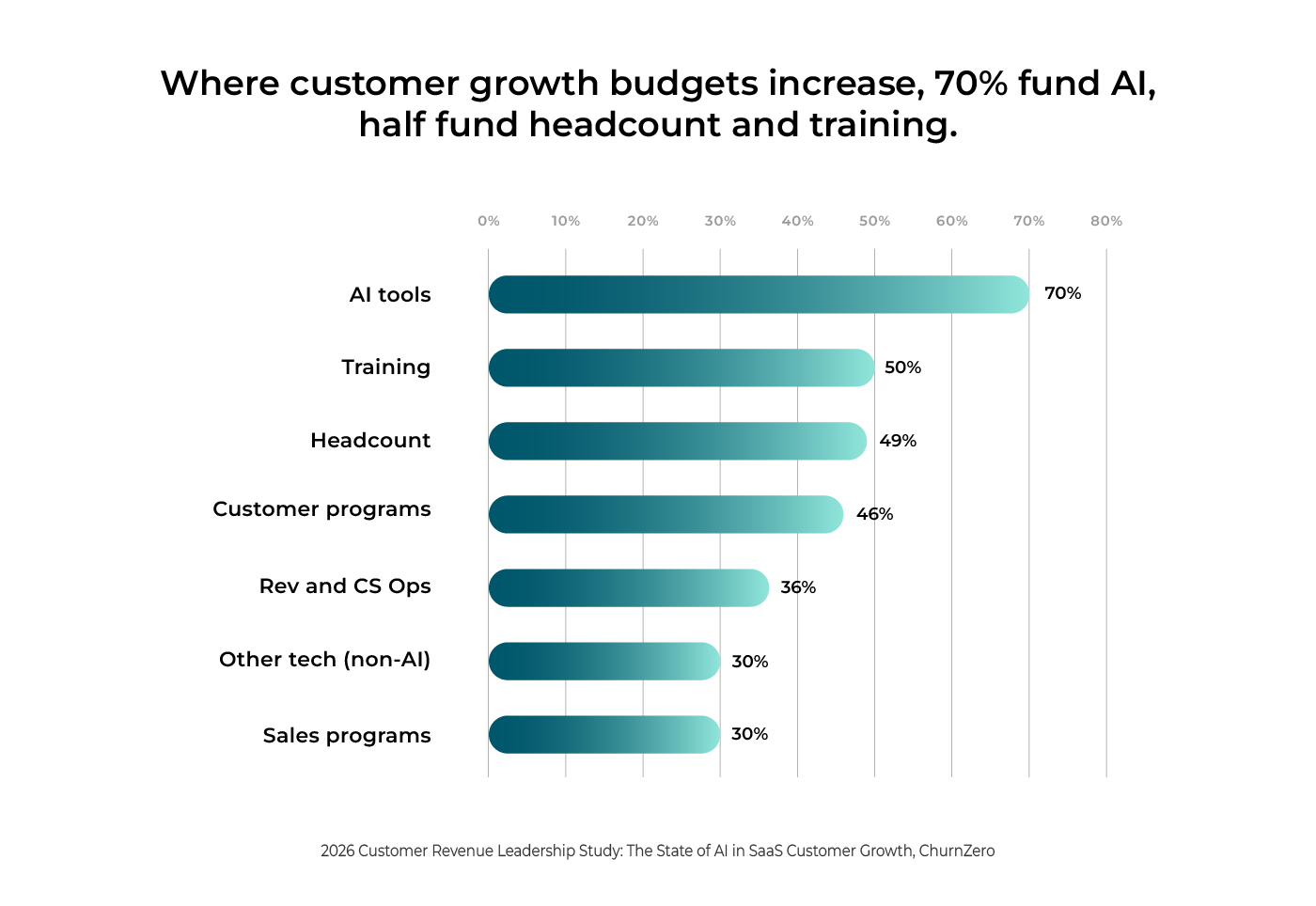
- Where there is budget, it is going to AI, not people.
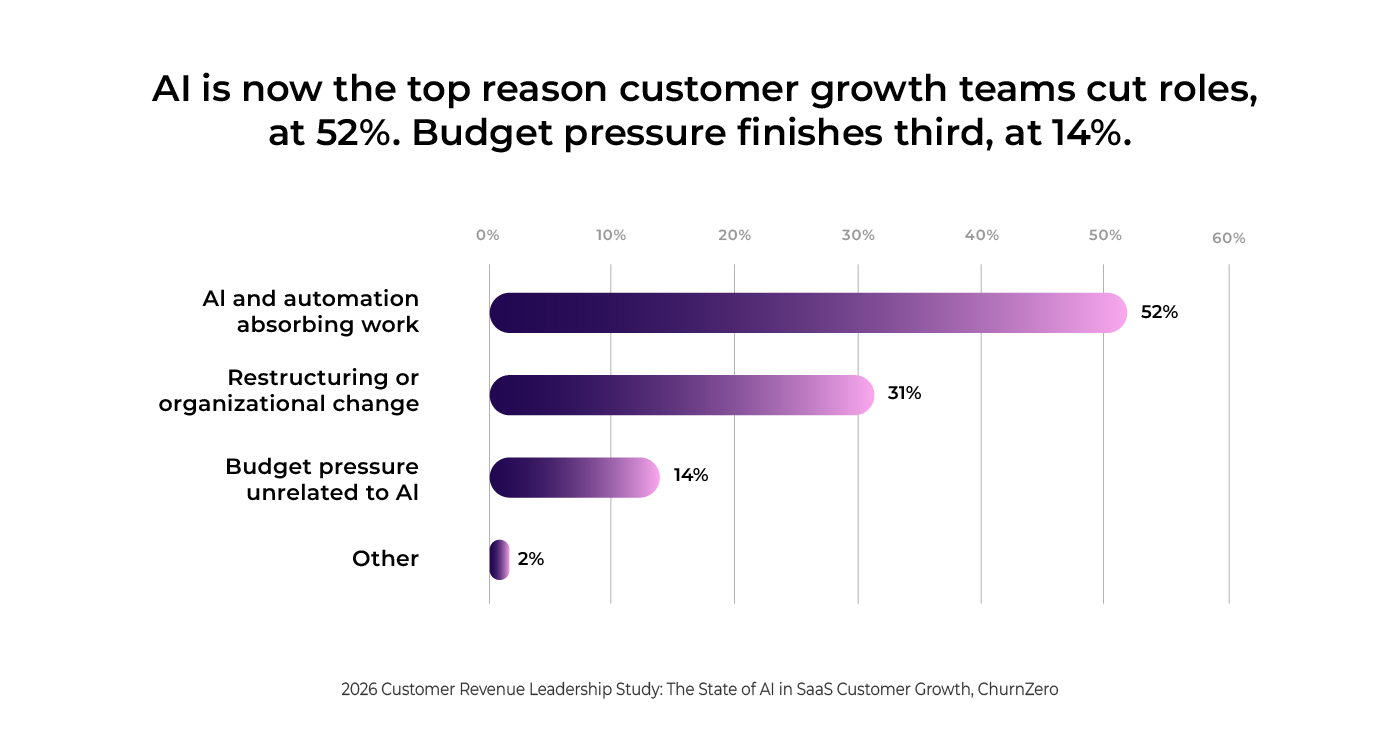
- Among teams that cut roles, half say AI absorbed the work.
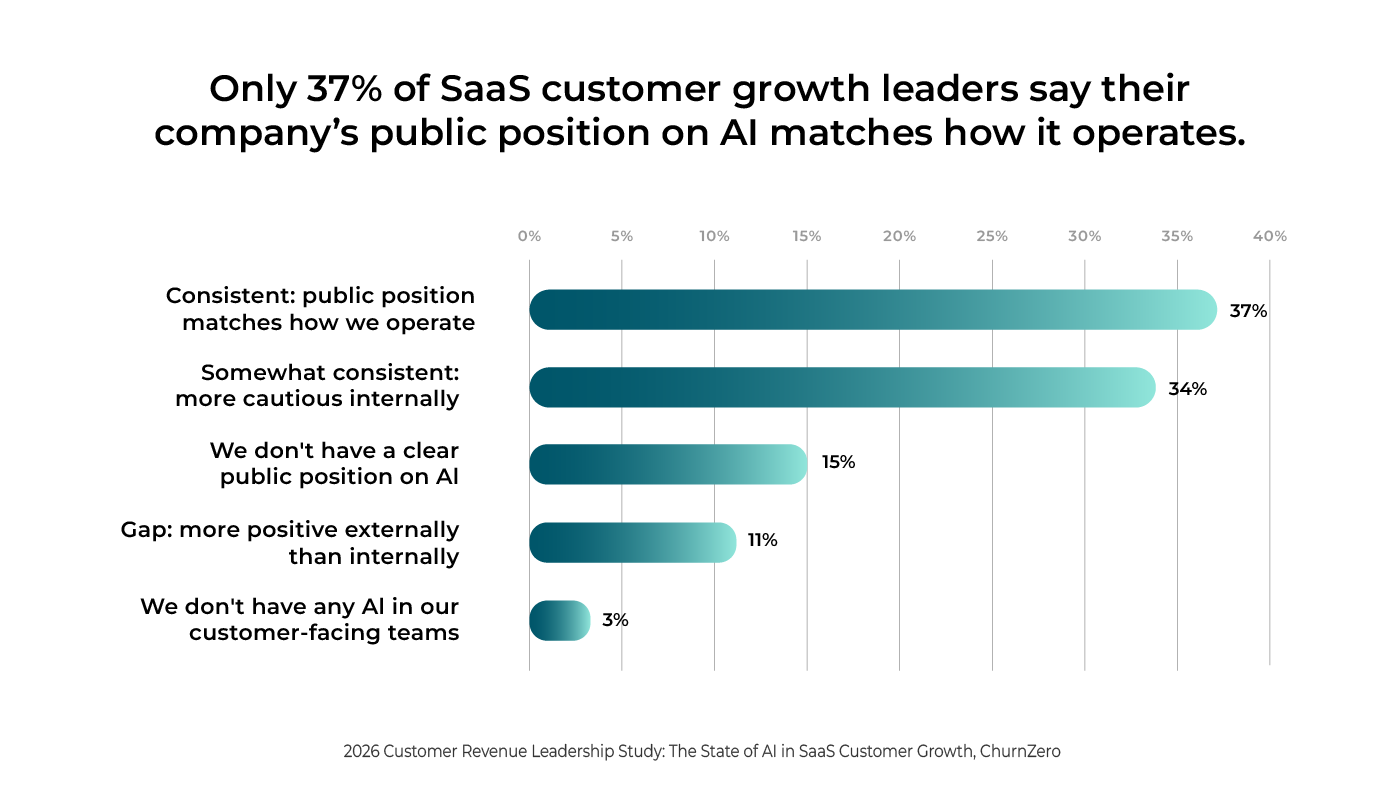
- AI washing is real.
- CS priorities and CS measurement still do not fully align.
- Software implementation and software revenue impact are very different things.
- NRR in SaaS has stayed stagnant over the last three years. However, AI maturity shows clear impact.
About the study.
Each year we ask customer success and revenue leaders how they run their teams, where their money goes, and what is working.
This year we put a second question underneath all of it. What has AI changed
about the day-to-day work, and what has it changed on the org chart and the budget line?
580 leaders answered. They lead customer success, sales, or both, at B2B software and services companies of every size.
Firmographics
- 70% of respondents had titles of director or above
- 56% lead customer success teams, 28% lead customer success and sales teams
- 16% lead sales teams
- 70% Median share of revenue from existing customers
Special thanks to Sara Boostani, marketing research analyst at 6sense, for doing the analysis, and Kerry Cunningham, head of research & thought leadership at 6sense, for the ongoing partnership with
this study.
The experts.
Six experts weighed in on the findings and what they mean to customer growth teams.

Select data.
Everyone is using AI…but mostly at the tactical level.
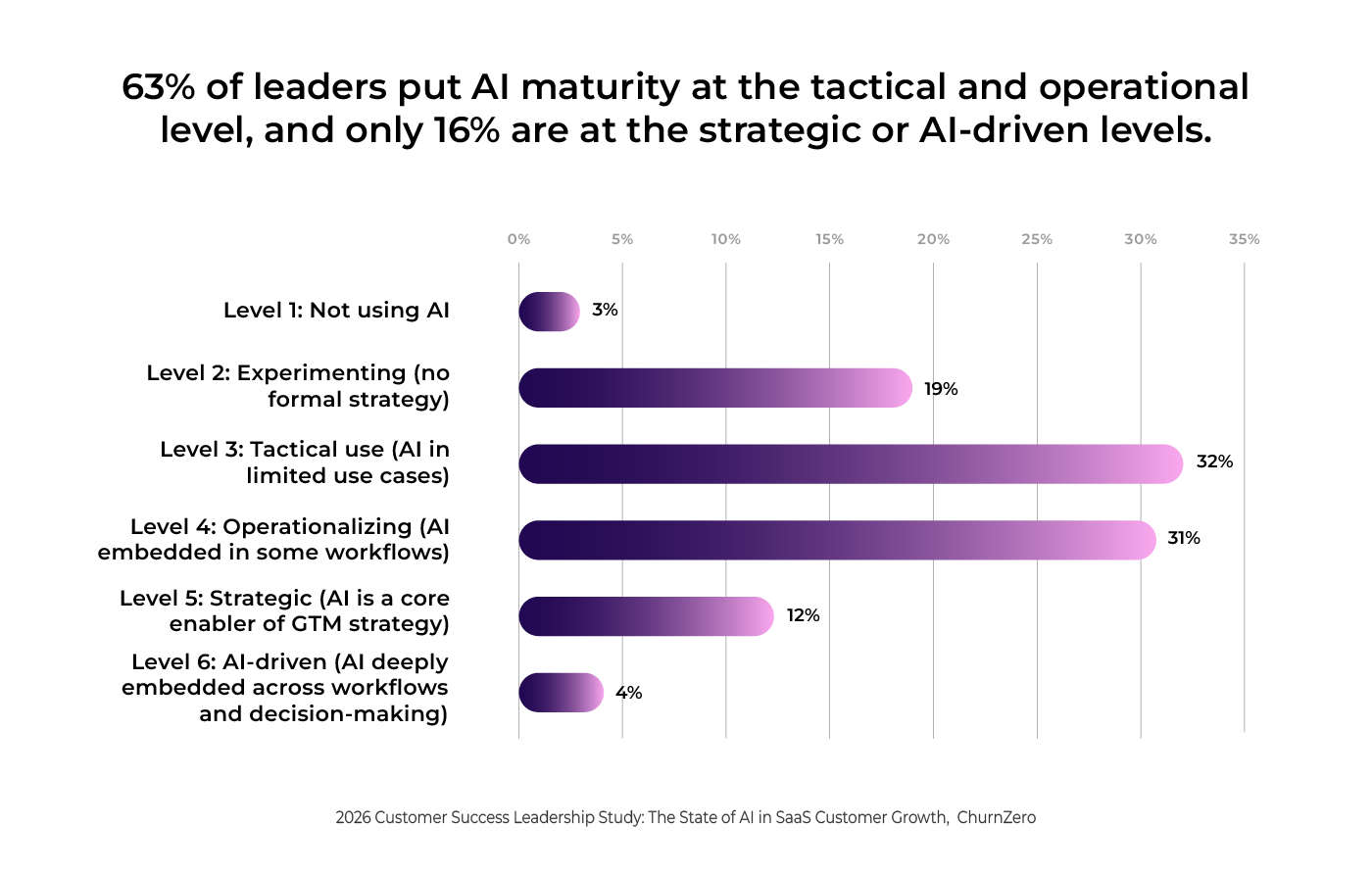
Almost every customer growth leader has AI in their work somewhere, but most of it is still tactical use, such as logging tasks, summarizing leads and calls, and doing account research.
Four in five leaders say AI cuts the time their team spends on manual tasks.
Nearly two-thirds of customer growth leaders state they are at tactical/operational use of AI and one in six call AI core to how their team functions.
Almost half of sales teams turn to AI first when they are trying to solve a problem, compared with one-third of CS teams.
The most common answer to “How do you measure AI?” is “We don’t.”
Ask a customer growth leader how they measure AI and the most common answer is that they don’t.
Half have no consistent method at all. Customer success teams have the weakest measurement: nearly two-thirds have no method, and only one in five ties AI to revenue.
AI maturity narrows the measurement gap a bit (the more mature your team, the more you measure AI’s impact), but never closes it.
Finally, the teams that can’t measure are also the ones approving everything by hand, four times more likely than the rest to require sign-off on every recommendation.


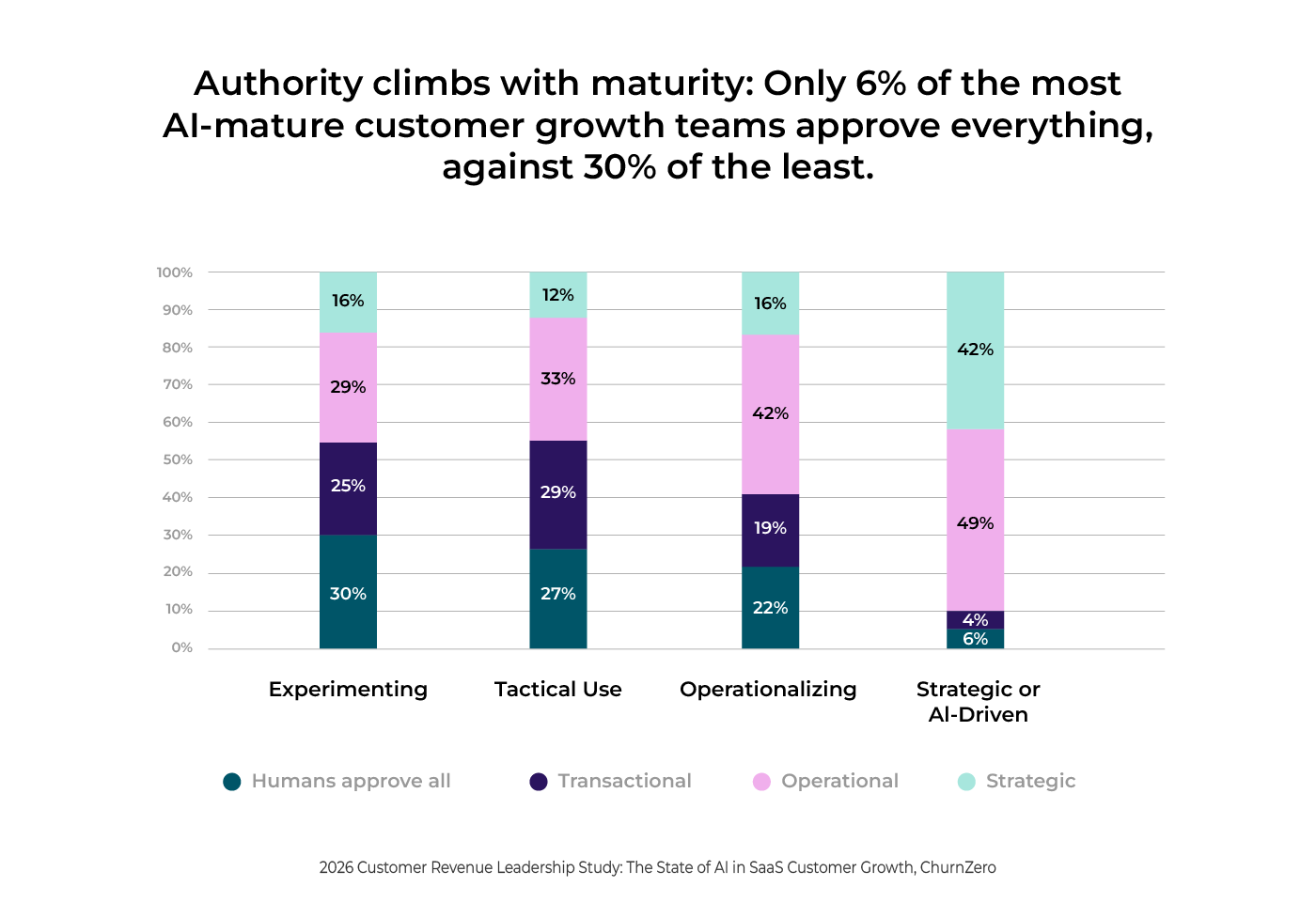
Autonomy and AI: Four out of five teams stop AI short of making decisions.
Four out of five teams stop AI before it reaches a strategic decision. About as many teams give AI strategic authority as give it none at all.
Autonomy tends to climb with maturity, except for teams experimenting, which grant AI more strategic autonomy than teams using it tactically.
Company stage works the same way. Nearly four in 10 established companies make a human approve every recommendation, against one in 10 of the youngest, though every stage builds, funds, and measures AI at the same rate.

Building AI: Everybody’s doing it, but not everyone is using it.
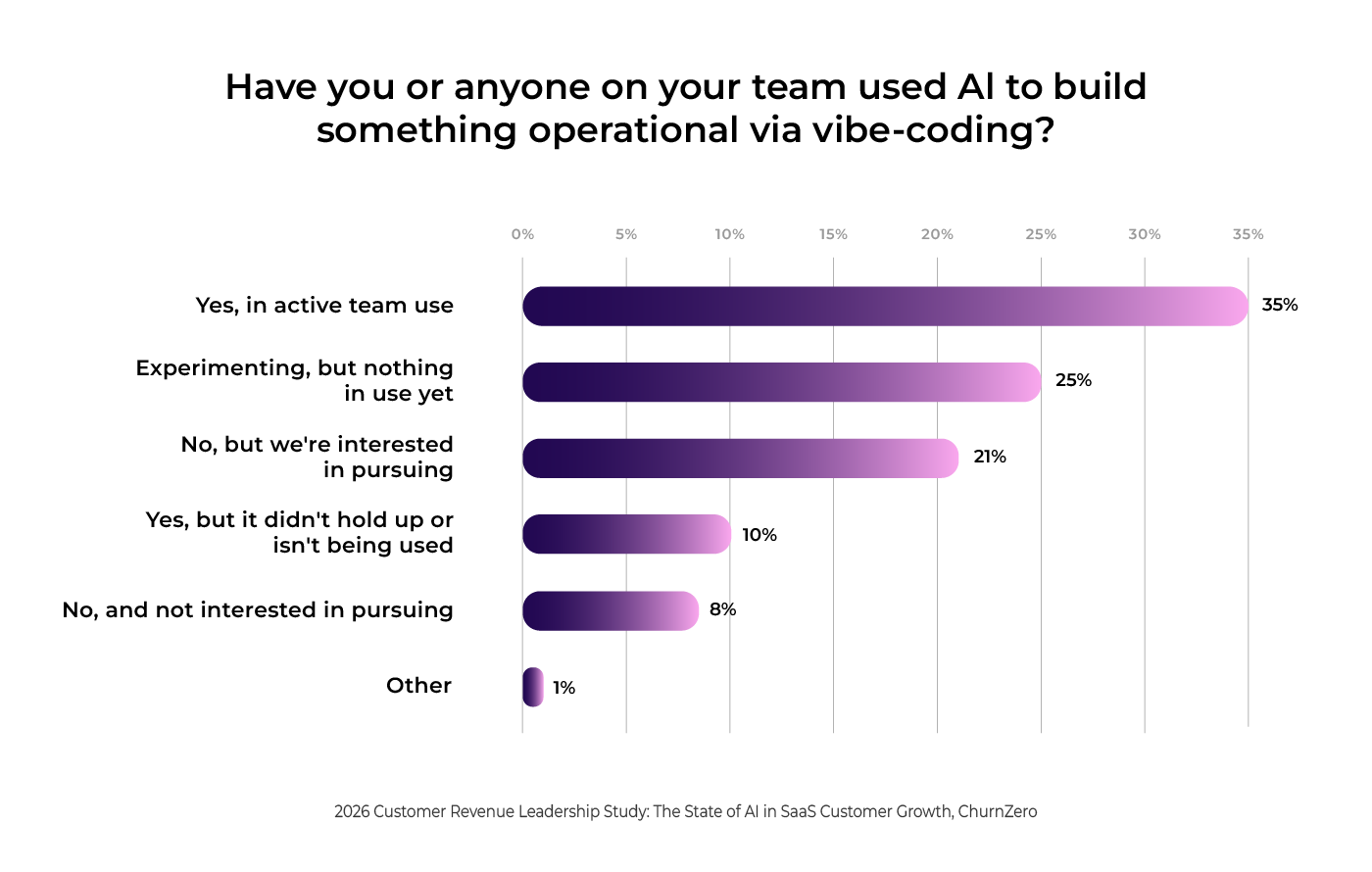
Seven in 10 teams have built something with AI. Much of it is not in use.
The builders are the advanced end of this study: further along on maturity, measuring more, building again once they start. Four in five who vibe-coded went on to build a custom assistant.

When money gets tight, customer teams protect AI and cut headcount.
Seven in 10 teams with growing budgets are investing in AI, ahead of training, headcount and customer programs. Where money is tight, headcount goes first and AI is near the bottom of the cut list.
That order is uncomfortable next to the measurement data: the function most willing to trade people for AI (customer success) is the one least able to show AI is working.
Teams are formally funding AI in some way at 80%, but only 15% give it a dedicated line item as a core investment. For most, it is embedded in a tech budget or spent ad hoc.


AI and workloads: AI impacts hiring, headcount and where the work goes.
For teams cutting budgets, AI was the top stated reason customer growth teams cut roles — ranking over restructuring or budget pressure. And those teams are shifting work from the team to AI instead of remaining team members.


Public position vs. reality: AI washing and a caution for buyers.
Only about a third of leaders say their company’s public position on AI matches how it operates.
The rest hedge internally, run an outright gap, or say nothing publicly.
The further the external story runs ahead of the internal one, the worse the measurement.
Among companies with an acknowledged gap, more than half have no consistent way to measure AI. Among those saying nothing, almost nine in ten don’t.
See AI’s impact on customer growth teams.
2025 Study
2024 Study

2023 Study
2022 Study
2021 Study