Quick Summary: Want to become a CCO? Start by shifting from execution to strategy. These five key lessons from CS leaders will help you prioritize like an executive, align with your sales and product counterparts, and navigate the IC-to-leadership leap.
Leadership in customer success isn’t just about moving up; it’s about leveling up. That shift from managing a team to leading an organization demands more than just experience. It requires a mindset change.
As Abby Hammer, chief customer and product officer at ChurnZero, put it at ZERO-IN 2024: “As a manager, you’re looking at execution and timelines. But as a leader, you’re thinking: where are we going? What will break in six months? And how do I get ahead of it now?”
This kind of strategic foresight—the ability to anticipate friction and steer through ambiguity—is what separates operational excellence from executive impact. It’s one of several lessons gained from ZERO-IN 2024’s keynote panel of seasoned CS leaders: Polly Speros, chief revenue officer, Fuel Cycle; Jo-Ann Chiam, chief client officer, AudienceView, and Nikki Briggs, chief customer officer, Scaled Agile; with Abby Hammer moderating.
Find out more about ZERO-IN, the essential customer growth conference, and our 2025 agenda.
How to become a CCO as a customer success leader
With an audience of hundreds of customer leaders, these execs shared the lessons they’ve learned on their way to the C-suite. Here are five of the most impactful takeaways, with video clips to bring their advice to life. You can watch the full discussion at the end.
1: There’s a big difference between execution and strategy.
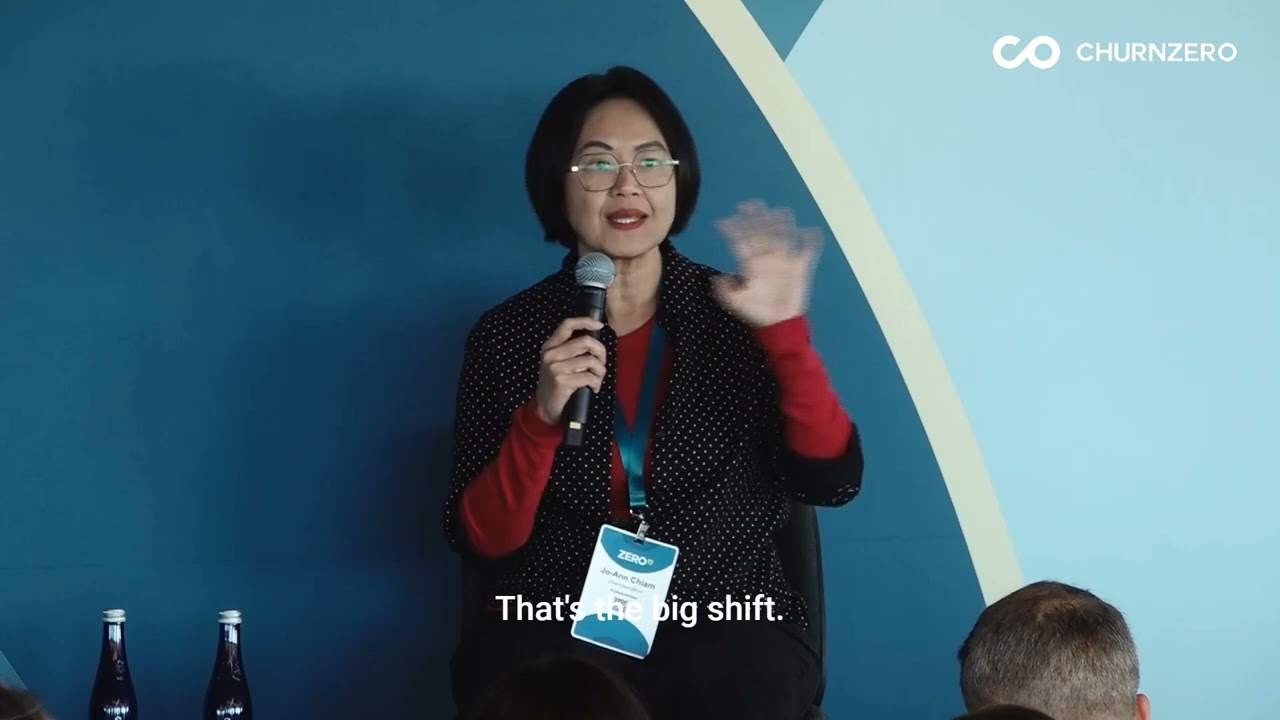
Managing is about hitting known goals. Leading is about figuring out how to get to the unknown ones. As Jo-Ann puts it, leadership is imagining what’s possible and being the one on the accountability block to make it real. It means stepping back from the day-to-day, unlocking the white space, and harnessing your team’s ideas—not just driving tasks.
2. Resilience is table stakes. Prioritization is the multiplier.
There’s no version of senior leadership without adversity. But resilience alone isn’t a strategy. The leaders on stage all stressed one operational habit that separates the high performers: prioritization
“If you can’t prioritize,” says Polly, “you’re going to have trouble getting things done.” Success isn’t about doing more; it’s about deciding what not to do, and creating systems that scale. This means:
1. Start from outcomes, not activity
Polly offered a practical frame: There are 12 weeks in every quarter. Where do you want to be at the end of those 12 weeks? Work backward from that answer. Let it shape how you structure your team’s work, calendar, and communication. Focus on movement, not motion.
2. Delegate with intent
When asked what role delegation plays in prioritization, Polly didn’t hesitate: “Eighty percent.”
Leaders who fail to delegate tend to mistake control for quality, and stay stuck in IC mode. Delegation isn’t abdication; it’s an investment in clarity and scale.
3. Build systems, not workarounds
If you’re solving the same problem every quarter: a fire drill on renewals, a late-stage expansion that fails due to lack of CS involvement, a support backlog spilling into QBRs, stop. Step back and design a better system instead. Durable CS leadership is built on repeatable, predictable progress, not heroic efforts.
3: Your title matters less than the impact you make.
Discussing a recent re-org, Polly shared what she tells team members who feel uncertain about their new titles:
“If you want to find a corner of the universe and conquer it, I’ll write up a business card that says ‘Emperor of This Corner.’ I don’t care what your title is.”
Instead, she says, focus on the work that really matters.
4: Adapt and align to the broader business structure.
Your team doesn’t operate in a vacuum, so adapt to your company’s existing structures. Nikki shared how structuring her CS team to mirror the sales organization has helped her drive impact at scale.
“We have regional sales territories, so I said: our CSMs are going to be assigned like that,” she says. “It actually sets up a really good experience for the customer.”
This structure promotes daily collaboration across functional lines, with stronger outcomes everywhere.
5: Your best executive ally depends on your business goals (but the CFO always matters).
During the session, we asked our panelists: If you could only pick one “BFF” on the executive team, who would it be: the CMO, CFO, CSO, or CPO? While a quick poll of the customer leaders in the audience favored the CPO, our panelists responses were more nuanced.
-
Polly picked the CPO, emphasizing alignment on innovation vs. customer need.
-
Nikki chose the CSO, citing the value of seamless collaboration in front of the customer.
-
Joanne, deep in budgeting season, went with the CFO, underscoring the operational necessity of financial clarity.
The takeaways for CS leaders: pick your relationships strategically, and invest in the ones that move the business forward, not just your function.
Watch the full discussion here.
If you’re looking to become a CCO or take your customer leadership to the next level, these lessons are essential.
Learn more about ZERO-IN, the essential customer growth conference, here.