

As customer success becomes increasingly digital, it’s easy to overlook the fundamentally human skill of understanding what really motivates your customers. You could call it customer success psychology.
But, when it comes to building relationships and influencing customers toward value, a working knowledge of this human aspect is a must-have for your CS toolkit.
Rachel Provan, the founder and CEO of Provan Success, knows more than most—so much, in fact, that we invited her to ZERO-IN 2024 to give attendees a primer on customer success psychology.
CS professionals build relationships with a diverse range of people every day, so even a basic understanding of psychology goes far, Rachel says. Just a little knowledge can help you navigate challenging situations better, show more empathy, and communicate more effectively—all of which leads you and your customers to better outcomes.
To get started, you’ll need to know the Triad of Behavioral Science: three fundamental areas that underpin the psychology of customer success.
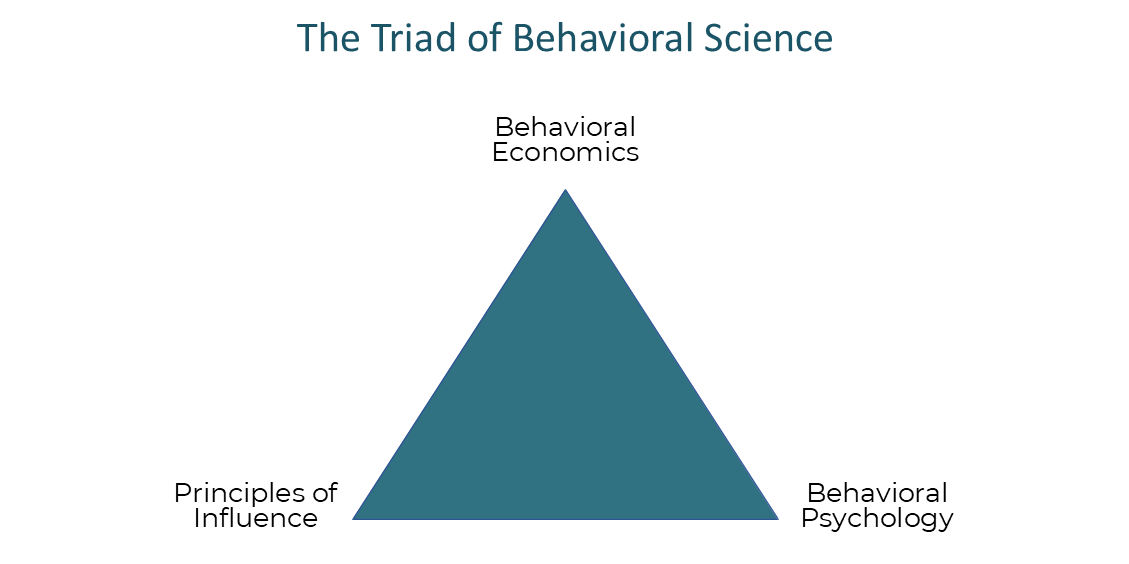
Let’s break the Triad down and explore the relevance of each point to your goals.
1. Behavioral psychology in customer success.
The reality is that humans are resistant to change and are always wondering, “What’s in it for me?” And this isn’t because they are jerks. They’re just busy. We all are!
As a CSM, when you reach out to customers, you’re competing with multiple unread emails, urgent DMs from their boss, deadline-intensive assignments, and actions that impact their KPIs. All of these play into your customer’s behavior and how they perceive your outreach.
So how might you lean on behavioral psychology to show them that you deserve to be a priority? You need to speak to their desired outcomes. The main desired outcomes that B2B customers have are:
- Save money
- Make money
- Increase efficiency
When you speak to any of these three outcomes in your outreach, you give yourself a higher likelihood of getting a response and building the relationship. With these three outcomes in mind, it would also be a good idea to implement these three strategies in your outreach efforts:
- Engaging different stakeholders on items they care about
- Aligning with company initiatives
- What will make them look good to THEIR boss?
Working with these outcomes and strategies in mind for your outreach efforts, says Rachel, will yield more responses and more high-quality conversations.
2. Behavioral economics in customer success.
Three key concepts of behavioral economics, the second point of our triad, are particularly relevant to customer success.
- Anchoring: We rely heavily on the first piece of information we are given about a topic.
- Choice Architecture: The presentation of choices in different ways impacts how we make decisions.
- Nudges: Subtle cues can influence behavior in a way that doesn’t feel like restricting choice.
How can CSMs leverage behavioral economics in their day-to-day interactions with customers?
Anchoring can be applied during pricing or feature discussions by framing options in a way that highlights value; for instance, starting with premium plans or advanced features to set a benchmark for expectations.
Choice architecture allows CSMs to present options strategically to guide customer decisions; for example, grouping features into packages or highlighting the most popular choices to reduce decision fatigue.
Nudges can be integrated into communications by using subtle cues, such as reminders of unused features or success stories, to encourage outcomes like increased platform adoption or renewal.
3. Principles of influence for customer success
To apply psychology mindfully, it’s important to draw a line between influence and manipulation. You can’t build long-lasting relationships by tricking people for short-term gain, and a good way to avoid this is to stick to influence techniques in which you give initial value to gain mutual value.
These three psychology-backed strategies for customer interactions fall into Rachel’s “approved” category.
Reciprocity – When you do something positive for someone, people feel the urge to return the favor.
Take the example of a CSM who goes out of their way to address a highly technical customer need and takes ownership until everything is resolved. Once the dust settles, the customer is more likely to be open to an ask, such as leaving a review or testimonial.
Social Proof – People tend to unconsciously copy the actions of others in how they behave.
For example, most CS professionals have experienced a conversation with a truly irate customer. After a while, you come to realize that having a calm voice and really listening are the keys to influencing the conversation for the better. In feeling heard and understood, your customer becomes more likely to listen and understand, leading to a far more productive outcome.
Priming – Using certain words and phrases early in a conversation can influence the other person to think a certain way.
For example, when you use words like “future,” “long-term,” and “success” in a conversation with a customer, they’re more likely to take a long-term perspective on what you’re discussing. By using these words early, you’re “priming” your customer with a positive outlook and helping them think beyond short-term roadblocks to long-term value.
Want to learn more about the psychology of customer success?
If you found this interesting, the good news is that there’s a lot more to learn. Rachel’s podcast, The Psychology of Customer Success, is a great resource for any CS pro who wants a better grasp on how customers think and operate.
Plus, we hope to have Rachel back for a ChurnZero event in the near future. Stay tuned.


