At our most recent ZERO-IN conference, GTM leaders Aaron McReynolds (CEO, Alysio), Kyle Shepard (SVP of Customer Success, Teramind), and Jaime Acosta (G2) shared their roadmap for navigating and thriving in the era of AI-first customer success.
These three leaders anticipate three fundamental shifts in how teams approach growth and scaling. And, for all three, the human touch remains essential alongside agentic AI, especially in delivering high-value strategy.
So what are the three big shifts that Aaron, Jaime, and Kyle see as pivotal to success in an AI-powered world?
Shift 1: Adopt an AI-first customer success strategy.
The traditional CS model goes: more customers → more CSMs. That model is now halfway into the rearview mirror.
The new standard is to start with AI, then justify humans. Aaron framed it bluntly: don’t ask for more headcount. Ask for more code.
“I always challenge my team to go to AI first, be as efficient as possible,” he says. “Then, when we really feel like we need to go on scale, that’s when you justify the human.”
In practice, this changes how you’ll design your team as a CS leader.
- AI becomes the first layer of scale, not a support layer.
- Headcount is added only when AI reaches its limits.
- Coverage models are built around systems, not ratios.
It also reshapes how teams evaluate tools. Businesses are buying their own AI solutions through short pilots rather than long-term contracts (hence the rise of experimental recurring run-rate (ERR)). They test quickly, switch quickly, and expect immediate value.
That creates a new constraint for CS: you don’t have time to ramp into value. Soon, customers will expect you to deliver it immediately and keep proving it.
Shift 2: Eliminate “work about work” and redesign the CSM role.
Customer success (and other GTM) teams have long felt the burden of data entry, reporting, and handoffs consuming a disproportionate share of the working day. AI will change that by removing entire categories of work.
Kyle describes the goal simply: “How can we eliminate all of the remedial, administrative tasks that CSMs have to do, and give them more time to spend in front of their customers?”
Leading CS teams are already operationalizing it in two ways:
- Using AI to automate internal workflows and eliminate administrative drag.
- Using AI to deliver value at scale across digital and pooled segments.
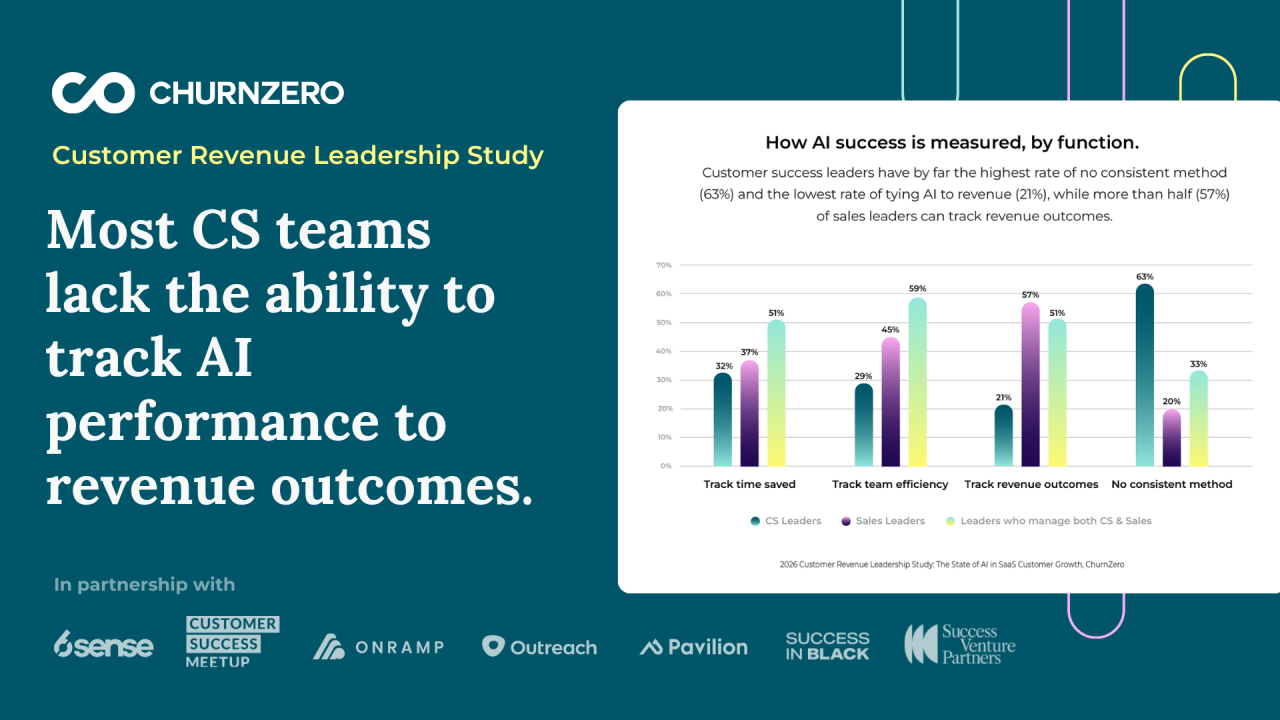
However, all three presenters expressed skepticism around “time saved” as a metric.
Leaders shouldn’t assume that extra time translates into better outcomes, they emphasized. Instead, you’ll want to tie AI directly to measurable impact—revenue surfaced, risk identified, expansion accelerated—and look to redefine your workflows rather than just make them efficient.
Related: Why productivity is just the entry point for AI-powered customer success teams.
Shift 3: Scale segmentation and move to signal-driven growth.
Can this agentic shift still have a human component at scale? It’s a challenge, especially when CS is dealing with pooled or digital-only customer segments. However, AI agents can bridge the gap by moving humans from reactive support to proactive engagement:
Instead of assigning coverage based on account tier alone, teams can use real-time signals—usage, engagement, conversation data—to determine where to act. That shows up in two ways:
1: AI drives proactive, personalized engagement across digital segments.
Think of it as self-service scaling, relying on AI agents to deliver proactive, “right message, right time” experiences for large pools of customers, mimicking a dedicated CSM.
2: AI surfaces expansion and risk signals within enterprise accounts.
“We think about 15–20% of revenue lives in your data, says Aaron, tying the effect back to revenue impact. In other words, a good deal of “unrecognized revenue” sits buried in customer interactions and product usage. Use AI as a diagnostic layer to surface it, and you can prioritize the right accounts at the right time.
At the same time, agentic AI improves the customer experience. It helps you maintain continuity across sales, onboarding, and success, reducing the need for customers to repeat themselves and making interactions more cohesive.
Related: How the future of customer success is autonomous, and why it’s great news for your team.
The human edge won’t go away; it will become more visible.
Despite the constant push for automation, there is one thing an algorithm can never replace: human presence. It’s the “why” and “how” behind AI’s conveniently provided “what.”
Jaime points to a formula from Kellogg School of Management: presence equals credibility plus ease, divided by ego.
To be more specific, a human’s ability to read the room and provide vocal inflection and empathy is an irreplaceable piece of the puzzle, whether it’s in a high-stakes EBR, customer onboarding meeting, or a weekly one-on-one.
There’s also a clear boundary emerging. Teams are comfortable using AI to prepare, analyze, and coach, but not to replace genuine human interaction.
Kyle captured that distinction directly: “If I’m trying to have a genuine human connection with somebody, I don’t want AI to be anywhere near it.”
In other words, look for AI to support interactions, not replace them.
What do CS leaders need to change for AI-first customer success?
The shift to AI-first CS isn’t theoretical anymore. It’s operational.
Once theoretical, the shift to AI-first CS is now very much operational. As a leader, you need to rethink how you design teams, measure impact, and develop talent. That means:
- Building AI-first capacity models instead of relying on headcount growth.
- Treating experimentation as a core operating behavior, not a side initiative.
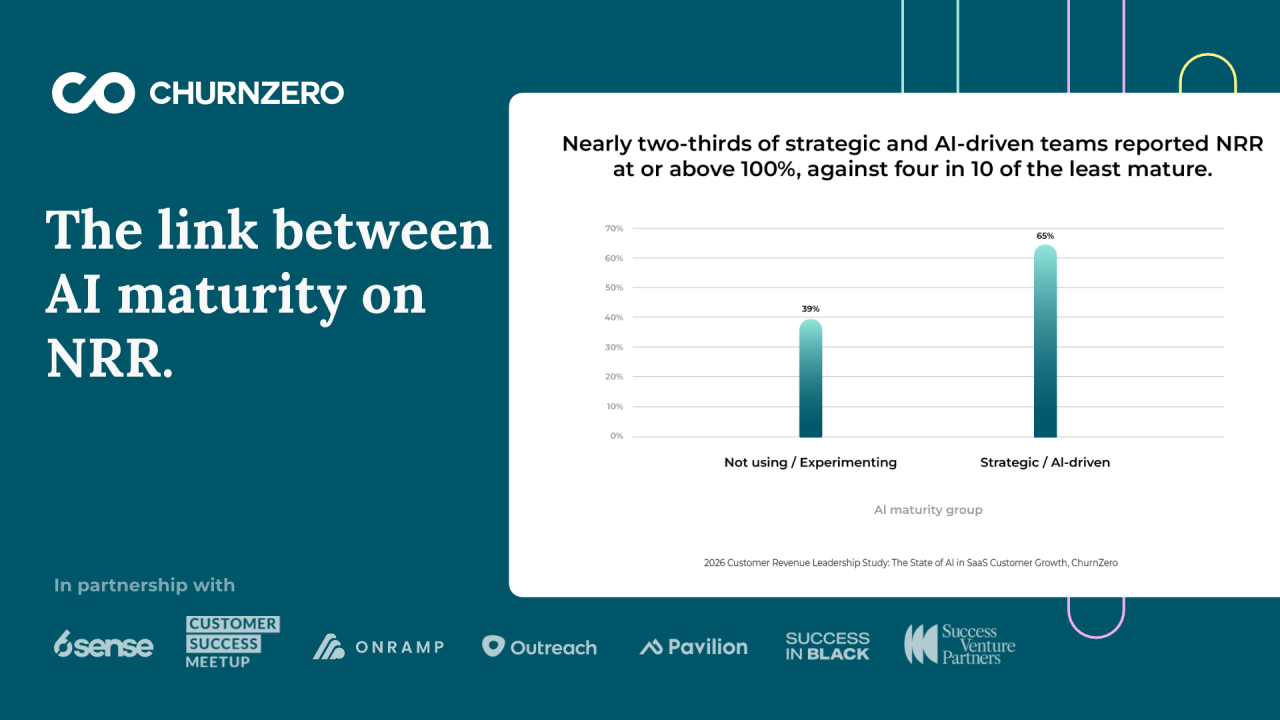
- Tying AI investments to revenue outcomes, not efficiency claims.
- Upskilling your team to use AI tools at the risk of being outpaced.
Success won’t be about adopting the most tools, but about rebuilding how your organization works around you.
Where are you on the path to AI-first customer success?
Moving from human-intensive scaling to AI-first systems takes time. It requires new tools, new skills, and new ways of thinking about value.
To visualize where your team stands—and what to do next—review the model comparison chart below.